
Eastern North Carolina is in the grip of the worst drought in decades, and if you haven't thought about what that means for your property, now is the time.
If you've looked outside lately, you probably already know something feels off. The ground is dry, the Spring grass isn't bouncing back the way it usually does, and the air has that unmistakable feeling of a region that hasn't seen enough steady rain in a long time.
You're not crazy...
Eastern North Carolina is currently experiencing one of the most severe drought events in recent memory, and it's getting worse/more noticeable just as spring lawn care season kicks into full gear.
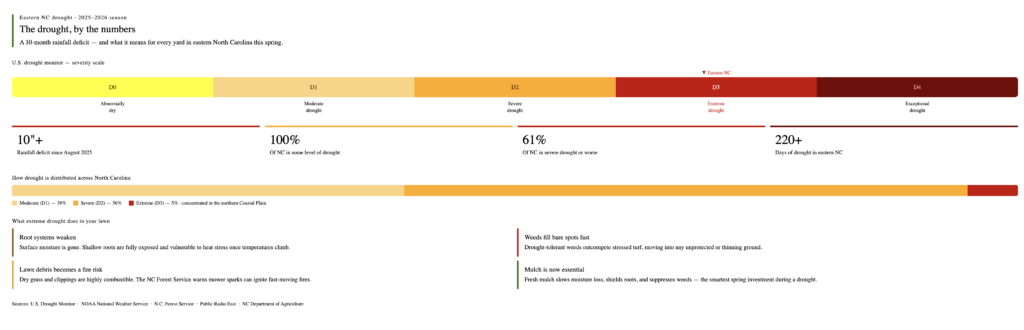
- 100%of NC in some level of drought
- 61%of NC in severe drought or worse
- 10"+Rainfall deficit since August 2025
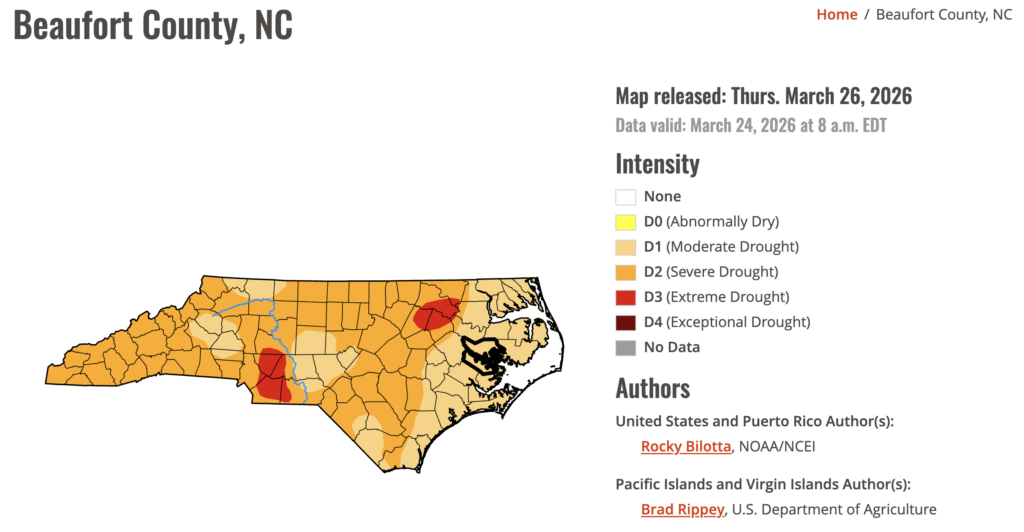
The U.S. Drought Monitor has pushed parts of our northern Coastal Plain into "Extreme Drought" the second-highest severity level. The NC Forest Service has issued a statewide burn ban, citing critical wildfire risk, and the National Weather Service says this drought is likely to persist well into spring, even if rainfall returns to near-normal levels.
For homeowners and property owners across eastern North Carolina, this changes the game for spring lawn care.
Here's what you need to know...
What extreme drought does to your lawn
Most people picture drought damage as a lawn that turns brown and crunchy, and yes that does happen, but the damage runs deeper than what you can see from the street.
When soil stays dry for months, as ours has since last August, the root systems of your grass and plants begin to pull inward. Shallow roots, which usually find moisture near the surface, are left completely exposed. Grass that has been underfed, undermulched, or cut too short during a dry stretch doesn't just look bad; it becomes genuinely vulnerable to pests, disease, and heat stress once temperatures climb in May and June.
Weeds, on the other hand, love this window.
Many weed species are more drought-tolerant than desirable turf grasses. While your lawn is fighting to survive, opportunistic weeds are moving in to fill the gaps. If you've already noticed bare patches or stressed areas in your yard, that's exactly where weeds will take hold first.
Now, weeds are bad, but there's also the fire risk, which is a serious concern for eastern NC right now, as dry grass and dead plant material are highly combustible.
The NC Forest Service has warned that even sparks from lawn equipment can ignite fast-moving fires under current conditions. That's not an exaggeration; it's the reality of operating outdoor equipment in a drought-stricken landscape.
What you should (and shouldn't) do with your yard right now
What helps
- Mulch now, not later. Fresh mulch is one of the single most effective things you can do for your property during a drought. It locks in whatever moisture remains in the soil, keeps root temperatures lower, and dramatically slows evaporation. In eastern NC, where heat and humidity can take over fast, mulching is always smart, but right now, it's essential.
- Raise your mowing height. Cutting grass shorter doesn't make it look better during drought; it makes it weaker. Taller grass blades provide shade to the soil, reduce water loss, and help roots stay healthier. This is one of the easiest adjustments you can make with immediate results.
- Don't skip weed control. If weeds are establishing themselves in your stressed lawn right now, they're borrowing the limited moisture your turf needs to recover. Early weed control this spring will protect the investment you're making in your property and give your lawn a real fighting chance once rain returns.
- Water strategically if you have irrigation. Deep, infrequent watering is always more effective than frequent shallow watering, and in drought conditions, it's critical. Watering at dawn reduces evaporation loss. If you don't have irrigation, even targeted hand-watering around trees and shrubs can make a meaningful difference.
- Inspect your landscaped beds. Mulched beds dry out more slowly, but plants under stress still need attention. Look for signs of wilting in shrubs and perennials that established last fall — these plants haven't had time to build deep root systems and are most vulnerable.
What to avoid
- Do not open burn anything. The statewide burn ban is in effect. Beyond the legal issue, burning yard debris in current conditions is genuinely dangerous. Wait for the ban to lift and for conditions to improve before burning any yard waste.
- Don't aggressively fertilize a stressed lawn. Heavy nitrogen applications on a drought-stressed lawn can cause more damage. If you're working with a lawn care professional, they'll know the right timing and product approach for current conditions. If you're going it alone, hold off until the drought breaks or consult a professional before applying.
- Don't ignore bare or thinning patches. They won't fill in on their own this spring, especially under drought stress. Left unaddressed, those spots become weed highways by summer.
What this means for spring in eastern NC, and why acting now matters
When the drought finally breaks and rain returns, growth will accelerate quickly. The heat, the humidity, and the moisture all arrive together in eastern NC, and when they do, your yard will tell the story of what you did, or didn't do, this spring.
Lawns that were mulched, mowed correctly, and treated for weeds before the growing season peaks will have a significant advantage. Lawns that were left stressed and unattended through the drought will require considerably more time, effort, and expense to recover.
We've been serving properties across eastern North Carolina long enough to know this pattern well. The properties that look great in July and August are almost always the ones where the groundwork was laid in April and May, not those that were caught up on in June.
Right now, the window to get ahead of the season is open.
Spring cleanup, fresh mulch, a weed-control program, and proper mowing practices form the foundation.
If those are in place before the drought breaks and growth kicks into gear, your property will be in a completely different position than if you're scrambling to catch up.
We're here, and we're working across eastern NC
At Landscaping Unlimited, Inc., we understand what drought-stressed eastern NC properties need right now. Our team is actively serving homes and businesses across the region with spring cleanup, mulching, mowing, and weed control through our chemical program...
All of which are especially valuable this spring, given what the weather has put our landscapes through.
If your property has been showing signs of drought stress, bare patches, weed pressure, or neglected beds, this is the time to address it, before the season fully arrives and the workload compounds.
Reach out to our team and let's talk about what your property needs right now.
If you're looking for an opportunity to work hard, take pride in your craft, and be part of a team that serves eastern North Carolina with excellence, Apply Here: landscapingunlimitedinc.com/start-your-career
The drought will break, and when it does, make sure your yard is ready.
— Landscaping Unlimited, Inc. | Washington, NC | (252) 923-7481
Comments are closed!