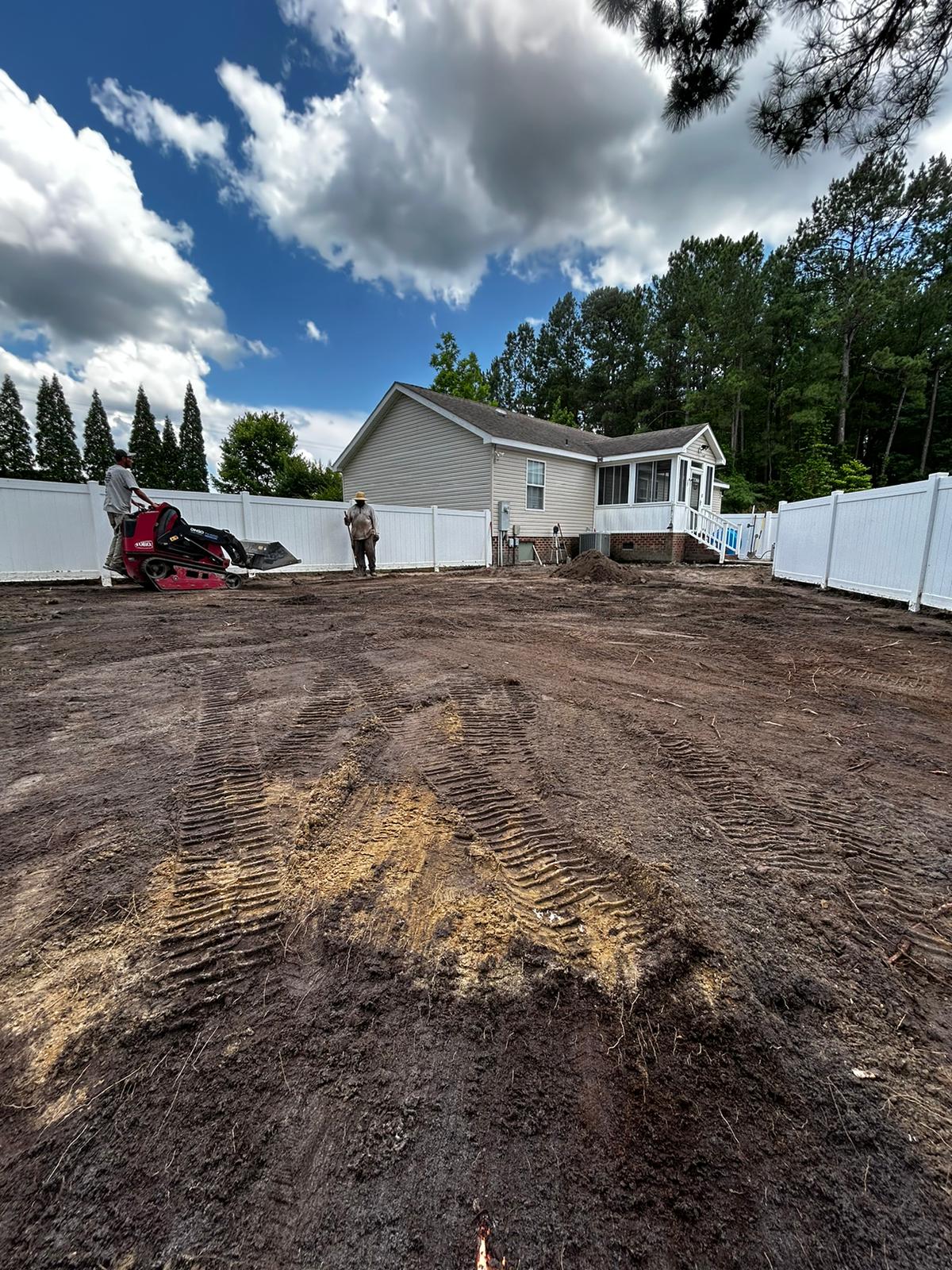

We finally got some rain; was your yard ready for it?
I know what you're thinking; we're deep in a drought, everything's brown and crunchy, we finally had one good rain, and here I am writing about too much water.
Stick with me, because this is the right time to talk about it.
Most people don't realize dry soil doesn't soak up water better...
It soaks it up worse.
When NC's sandy loam and clay bakes for months like they have this year, the surface forms a crust, and the soil itself can become water-repellent, much like a dried-out sponge lets water roll right off before it starts absorbing it. Soil scientists call it hydrophobic, while here at Landscaping Unlimited, we call it a problem waiting on a forecast.
In Eastern NC, we know how the rain comes back; it doesn't drizzle in politely over six weeks. It shows up in a tropical system dropping what feels like six inches in a single afternoon.
When that happens, water that can't go down goes sideways, and that's where standing water and washouts come from.
Read what your yard already told you
You don't have to wait for the storm to know where your trouble spots are, as your yard keeps the receipts for you.
Walk your property and look for:
- Bare streaks or exposed roots on any slope. That's a washout path. Water has already been using that route; it'll use it again, wider and deeper next time.
- Low spots where grass grows differently, thicker, thinner, or a different shade. Those are your ponding areas, even when they're bone dry today.
- Mulch that's migrated. If your mulch keeps ending up on the sidewalk or in the lawn, water is moving through those beds with some speed.
- Splash lines along the foundation. Dirt spatter on brick or siding means your gutters or grading are dumping water right where you least want it.
Have you listened to the Landscaping Podcast episode on preparing for hurricane season?
>>CLICK HERE TO LISTEN to EP. 67<<
What fixes the runoff situation?
Standing water and washouts are symptoms; the disease is water with nowhere to go, and there are only three cures: slow it down, spread it out, or send it somewhere on purpose.
Grading handles most of it, and this is where Landscaping Unlimited can help you out: the ground within 10 feet of your house should fall away from the foundation. A lot of "mystery" crawlspace moisture is nothing more than a yard that slopes the wrong way...
Downspout extensions are the cheapest fix on this list; six feet of pipe can move a roof's worth of water past your foundation.
For chronic wet spots, a French drain or dry creek bed gives water a designated route instead of letting it choose its own, and on slopes, plants beat plastic; deep-rooted natives hold soil in ways that landscape fabric never will.
Why now and not October?
Because drainage work is a lot easier, cleaner, and cheaper in dry soil than in muck.
Right now we can grade, trench, and pipe without fighting the water we're trying to manage. Once the ground is saturated, every one of those jobs gets harder and messier, which adds to the bill at the end.
So, take 20 minutes this week to walk your property.
Note the bare streaks, the migrated mulch, the low spots. If you find something you don't like or you're not sure what you're looking at, give us a call, and we'll walk you through it.
The drought will break eventually, and then the only question left will be: Is your yard ready when it does?