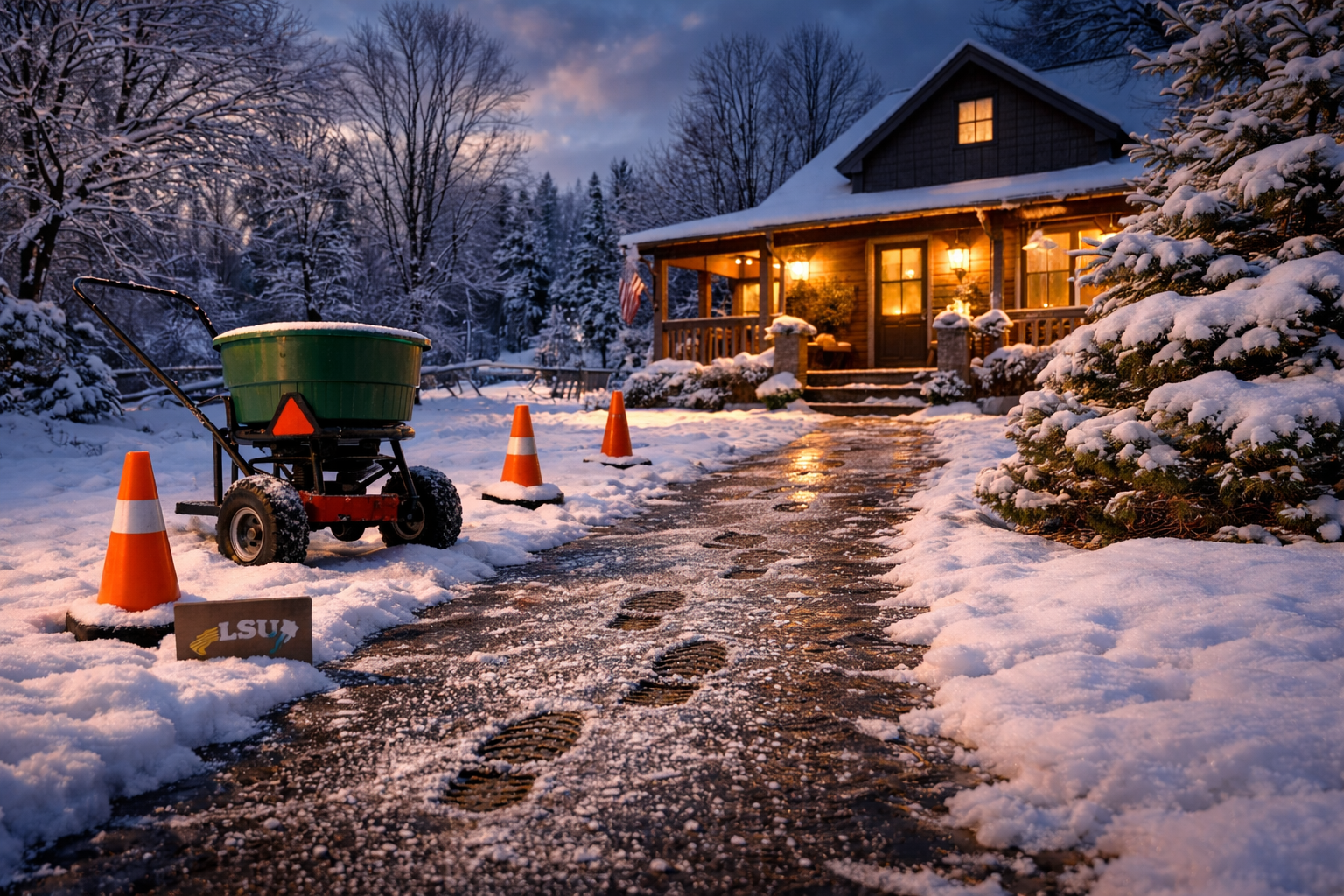

Snowfall in Eastern North Carolina isn’t just “pretty weather,” it’s a safety issue.
Ice forms quickly, roads freeze in patches, power outages become more likely, and cleanup work can put people in the hospital if they push too hard.
This guide covers practical, common-sense steps you can take to protect your family, your home, and your property during snow, ice, and extreme cold, especially in areas such as Greenville, Washington, Bath, Belhaven, Hyde, and other surrounding communities.
1) Walkway and Driveway Safety: Prevent Slips and Falls
The biggest danger for most people isn’t the snow, it’s the ice you don’t see.
Safer steps immediately:
- Keep entrances well-lit so you can spot slick patches at night.
- Spread ice melt or sand on steps, ramps, and high-traffic paths.
- Wear boots with real tread; smooth soles are a fall waiting to happen.
- Clear walkways early and repeatedly (snow compacts into slick ice fast).
Tip: Shovel wider than you think you'll need to, most falls happen when someone steps off the cleared path by accident.
2) Driving in Snow and Ice: What to Do (and What to Stop Doing)
Most winter wrecks happen because people drive like conditions are normal, until they aren’t.
If you must drive:
- Avoid cruise control.
- Brake early and gently, no sudden stops.
- If traffic lights are out, treat intersections as four-way stops.
- Assume bridges, overpasses, and shaded roads freeze first.
- Slow down and increase following distance (double or triple your normal gap).
If you don’t have to be on the road, don’t be on the road, as your schedule isn’t worth your life.
3) Cold Weather Safety: Protect Your Body and Your Family
Cold exposure becomes dangerous faster than most people in Eastern NC expect, especially when the wind is blowing.
There's no such thing as bad weather, just poor clothing choices...
Stay warm the smart way:
- Cover hands, ears, and feet first.
- Keep clothes dry (wet clothing drains heat fast).
- Dress in layers (base layer, insulation, outer layer).
- Check on older neighbors and anyone living alone.
- Bring pets inside and ensure outdoor animals have warm shelter and unfrozen water.
Red flags to watch for: Uncontrolled shivering, confusion, slurred speech, numbness, and pale/waxy skin. If you suspect frostbite or hypothermia, get medical help ASAP.
4) Prevent Frozen Pipes and Water Damage
Frozen pipes can burst, and burst pipes can lead to a five-figure repair bill.
Quick prevention checklist:
- Cover outdoor spigots.
- Disconnect and store hoses.
- Let faucets drip during hard freezes (especially at night).
- Know where your main water shutoff is before you need it.
- Open cabinet doors under sinks to allow warm air to circulate.
We know it sounds like overkill, but if temperatures stay low for multiple nights, this stuff matters.
5) Snow Removal Safety: Don’t Overdo It
Shoveling heavy or icy snow is a strain on the body, especially if you’re not used to it.
Safer approach:
- Hydrate, even in cold weather.
- Take breaks every 10–15 minutes.
- Warm up first (yes, even for shoveling).
- Push snow when possible instead of lifting it.
- Stop immediately if you feel chest tightness, dizziness, or unusual shortness of breath.
A friend of Zac's lost his neighbor due to a heart-attack had while shoveling; this is not something to mess around with. If you haven't been doing any cardio or strength training, shoveling heavy snow will wipe you out...
Take your time, or if you know you're too stubborn, hire someone to do it for you.
6) Power Outages and Heating: Avoid the Dangerous “Quick Fixes”
When the power goes out, people get creative—and that’s how emergencies happen.
Avoid these completely:
- Running a generator in a garage (even with the door open).
- Using an oven to heat your home.
- Burning charcoal indoors.
Safer moves:
- Use generators outdoors and away from windows and doors.
- Use space heaters exactly as directed, with clearance around them.
- Keep batteries, flashlights, blankets, and charged power banks ready.
When to Call Landscaping Unlimited for Help After a Snowstorm
Snow and ice often leave behind damage you don’t notice right away; things like broken limbs, torn turf, crushed beds, and drainage issues only show up after the melt-off has begun.
Call us if you need help with:
- Post-storm property assessment
- Drainage concerns after thaw and heavy runoff
- Safer access paths (walkways, high-traffic areas)
- Storm debris cleanup (downed limbs, scattered debris, damaged plantings)
We’d rather you call our team than risk getting hurt trying to muscle through dangerous conditions.
FAQ: Snow and Cold Weather Safety in Eastern NC
What’s the most common winter injury during snowfall?
Slip-and-fall injuries usually occur on steps, sidewalks, and driveways where snow turns into ice.
How do I keep my pipes from freezing?
Let faucets drip during hard freezes, open sink cabinets, and insulate outdoor spigots and exposed pipes.
Is it safe to use a generator in the garage?
No. Generators must be used outdoors, away from doors and windows, to reduce the risk of carbon monoxide.
Should I shovel snow all at once?
No. Clear in smaller rounds and take breaks; overexerting yourself is a real risk during cold weather.
DID WE MISS ANY OF YOUR QUESTIONS???
Send up a DM on Facebook or Contact via Email
- Landscaping Unlimited