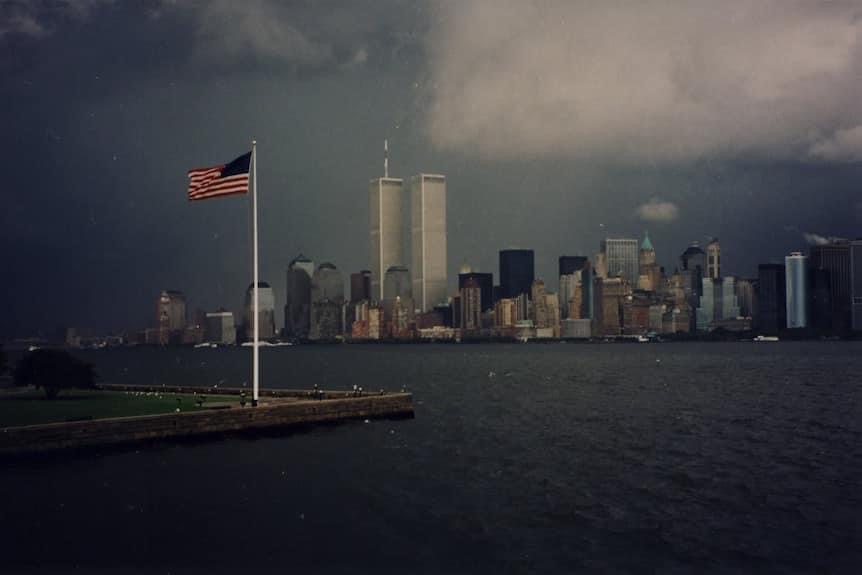

Twenty-five years ago today, nearly 3,000 people were killed in the attacks on the World Trade Center, the Pentagon, and Flight 93 near Shanksville, Pennsylvania.
Anyone old enough remembers where they were; I was in culinary arts class in high school when a girl came in and said, "The World Trade Center fell on the Pentagon." I told her that was impossible; she said it was on the news. I told her she must have misheard the story, and then, in the middle of us arguing in front of the class, the intercom blasted and put our school into lockdown; then we went home, and what we watched on TV was nothing short of horror.
Now, I'm writing this article for a landscaping company based out of Eastern North Carolina, and none of us have anything to add to what the families, first responders, and service members have said about that day; but there's a part of the story that belongs to our trade, and I think that it's worth sharing.
The pear tree in the rubble
In October 2001, about a month into the recovery at Ground Zero, workers found a Callery pear tree buried in the debris.
Someone had planted it on the plaza between the towers in the 1970s. When they dug it out, it was a burned stump about eight feet tall; the roots were snapped, the branches were broken, but one branch was still alive...
Nobody would have blamed them for hauling it off with everything else, but they didn't.
The New York City Parks Department took it to the Arthur Ross Nursery in Van Cortlandt Park in the Bronx, and the crew there went to work. Fertilizer, careful pruning cuts, and a lot of patience were applied, only for a storm to roll through and tear it out of the ground while it was at the nursery.
They replanted it and kept trying to save it.
It took nine years...
In December 2010, the tree returned to the World Trade Center site and was planted in the 9/11 Memorial plaza. By then, it stood about 30 feet tall. You can still see where the old scarred wood ends and the new smooth limbs begin, and every spring it's covered in white blooms.
They call it the Survivor Tree.
From 2013 to 2023, the 9/11 Memorial grew seedlings from it and sent them to communities that had gone through their own tragedies.
Why that story hits home for us
If you've spent any time in this trade, you know that bringing a damaged tree back to full life is slow work.
It takes years, and most of it happens when nobody is watching. Watering on schedule, making the right cut instead of the easy one, checking on it after a storm, and so on.
The people at that nursery weren't famous.
They did the work right, season after season, for nine years, and the Survivor Tree is standing today because regular people who knew plants refused to give up on it.
That's the part we think about.
The memorials were built with trees
Look at how the country chose to remember that day; at all three sites, trees are part of the answer.
At Ground Zero, the memorial plaza is planted with about 400 swamp white oaks. They were grown at nurseries in New York, Pennsylvania, and near Washington, D.C., to honor the three places where lives were lost.
NOTE: The Survivor Tree is the only one on the plaza that was there before the attacks.
At the Pentagon, there are 184 benches, one for each person killed there. Each bench carries a name and sits over its own small pool of water. The designers chose paperbark maples to shade them. Garden writers who visited in later years reported that the maples struggled on the hot site and crape myrtles were brought in, the same tree that lines half the driveways in Eastern North Carolina; right plant, right place matters even at a national memorial.
At Shanksville, the Flight 93 National Memorial covers about 2,200 acres of land that used to be a surface coal mine. The memorial has 40 groves, one for each passenger and crew member, with 40 trees in each. From 2012 to 2022, volunteers planted more than 150,000 native trees to heal the old mine ground, including the largest stand of restoration American chestnuts in North America.
When words weren't enough, people planted something.
A stone memorial stays the way you built it, a living one keeps growing, and it needs somebody to take care of it every single year.
The trades showed up
The recovery at Ground Zero ran until the end of May 2002.
Ironworkers, operating engineers, laborers, and equipment operators worked the pile alongside firefighters and police. They put in months of hard, dangerous work, and many of them paid for it with their health in the years that followed.
Blue-collar people don't usually get the headlines; on 9/11 and in the months after, blue-collar workers were right there doing the job that needed doing.
How you can mark the day
September 11 is recognized as Patriot Day and the National Day of Service and Remembrance.
If you want to mark it with your hands, there's plenty of work that fits a landscaper's skill set. Pull weeds and freshen the mulch around a local memorial or flagpole, clean up the veterans' section of a nearby cemetery, ask your local fire station if you can take care of their flower beds, or plant a tree with purpose.
I served five years in the Navy aboard the USS Harry S Truman, deploying twice, and then three years at Marine Corps Air Station Cherry Point; all were in the years after 9/11. The quiet mission was shared among everyone wearing the uniform, never let the U.S. get hit like that again. At every 9/11 memorial I've attended, I always reflect on those who lost their lives and those who acted with honor and courage to save others...
America is the greatest country on Earth, and that is because of all the Americans who understand that this country is great when we, the citizens who make her what she is, live our best lives and work together with the shared mission of living with a focus on doing what is right, and always choosing to stand after getting knocked down.
To the families of the people we lost, to the first responders, and to everyone who served after that morning, we will always help you get back up, and we haven't forgotten what happened to you.