

We aren't quite at the end of the growing season, but that light is on the horizon, which means it's time to start thinking about how you'll maintain your property so it enters the "dormant season" looking squared away.
Here in Eastern North Carolina, we run warm-season turf. Centipede, Bermuda, zoysia, St. Augustine, etc., and that grass is going to shut down and go brown whether you like it or not. What you do over the next eight to ten weeks decides whether it goes into winter healthy and comes out clean in April, or whether you spend next spring fighting weeds, thin spots, and disease scars you could have avoided.
Stop Pushing Nitrogen
If you take one thing from this article, take this: Late nitrogen on warm-season grass is a mistake.
Your last nitrogen application of the year should be going out now, not in October. Push nitrogen into September and October, and you get soft, tender growth right when the plant needs to harden off and move energy down into the roots. That tender growth is the first thing burned by an early frost, and it is exactly what large patch is looking for.
Centipede is the worst offender when it comes to over-fertilizing, as it is a low-input grass, and people seem to love to kill it with kindness every year.
Potassium is the exception; applying potash in early fall helps with cold tolerance and disease resistance, but apply only what your soil test tells you to, which brings us to the next item.
FOLLOW LANDSCAPING UNLIMITED ON FACEBOOK
Get Your Soil Tested While It's Still Free
North Carolina residents get free soil testing through the NCDA&CS Agronomic Services lab from April 1 through late November. Once peak season starts, right around the end of November, it goes to $5 per sample and runs through March 31.
So you have about three months of free testing left, and results come back in roughly two to three weeks. Pick up boxes and a homeowner submission form at your county Cooperative Extension office. Sample your lawn separately from your beds, and sample any problem area on its own so the numbers aren't watered down by the healthy turf around it.
The number that matters most is pH. Centipede wants acidic soil, somewhere in the 5.0 to 6.0 range. Bermuda and zoysia are happier around 6.0 to 6.5. If your pH is off, the fertilizer you buy isn't fully available to the plant. You are paying for nutrients the grass cannot use. Lime takes months to move the needle, which is why fall is the right time to apply it.
Don't guess. Test.
The Fall Pre-Emergent Window Is the Whole Ballgame
Every one of those winter weeds you hate in February (the poa annua, henbit, chickweed, and annual bluegrass) germinates in the fall while your grass is going to sleep. By the time you see them, the window to prevent them has been closed for months.
Soil temperature, not the calendar, triggers it.
When soil temps at a two-inch depth drop to around 70 degrees and stay there for several days running, it is time. In our part of the state, that usually lands somewhere in late September; a warm year will push it later, and a cool snap will pull it earlier.
CONTACT LANDSCAPING UNLIMITED TO GET YOUR LAWN ON OUR LIST OF PRE-EMERGENT COVERAGE TODAY
Apply the pre-emergent and water it in before those seeds break. Plan on a second application eight to ten weeks later to carry the barrier through the rest of the germination window, because most products won't last from September all the way to March on a single pass.
Miss this window and your only option is post-emergent work in the winter and spring, which costs more, looks worse, and puts herbicide on turf that is dormant and slow to recover.
Large Patch Is Coming
Large patch shows up on warm-season turf in the fall, triggered by the same conditions as your pre-emergent. Soil temps around 70 with moisture present, and centipede, St. Augustine, and zoysia get hit the hardest.
The important part is that preventative fungicide works and curative fungicide mostly does not. Once you see the circles, the damage is done, and you are just stopping the spread. Those scars will still be sitting there next spring when the rest of the lawn greens up, and you're going to be annoyed...
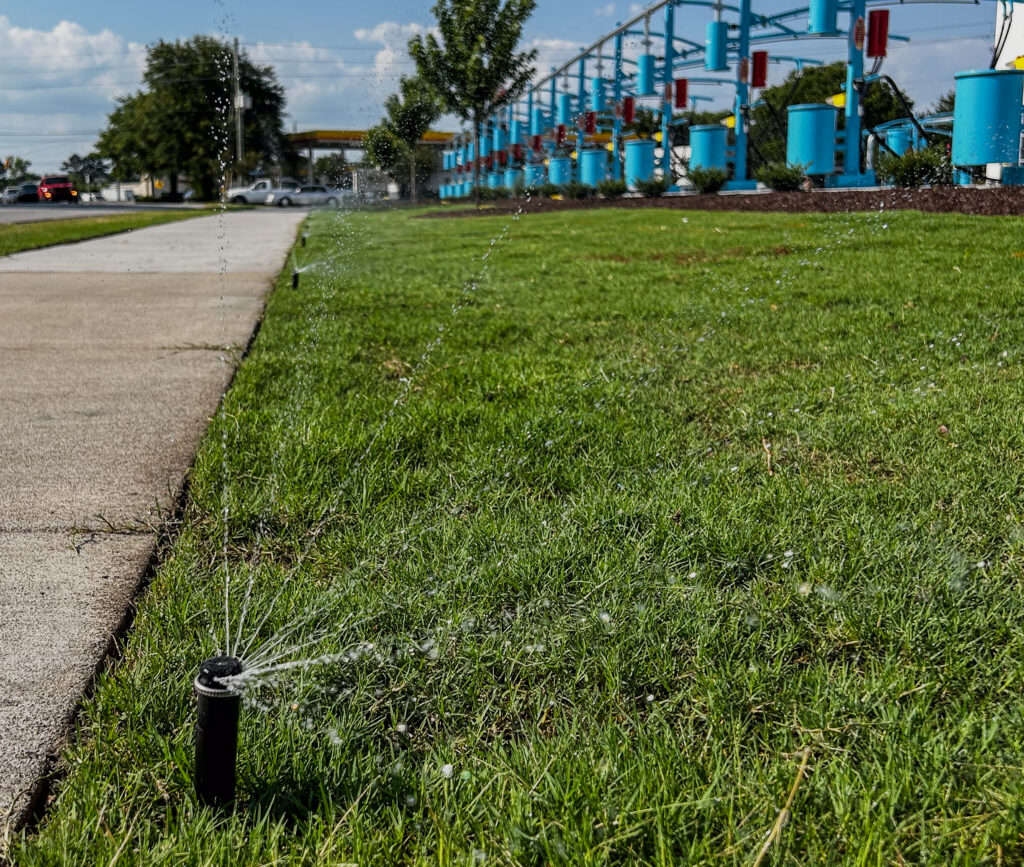
Two habits that make it worse: late nitrogen, which we already covered, and evening irrigation. If you water, do it early in the morning so the leaf blade dries during the day instead of sitting wet all night.
Keep Mowing, and Do Not Scalp It
Grass keeps growing until it stops...
Keep cutting on schedule right up until it does, and hold your normal height. Do not drop the deck a couple notches for a "final short cut." Scalping going into dormancy strips the plant's ability to store energy and opens the canopy up to every weed seed that lands. So once growth genuinely stops, one clean final cut and you are done for the year.
Then stay on top of the leaves, as a mat of wet leaves sitting on dormant turf all winter holds moisture, blocks light, and leaves you dead patches in the spring.
Be Honest With Yourself About Overseeding
People ask every year about overseeding ryegrass for winter green; yes, it works, and you get color in January, but the tradeoff is that in the spring, the ryegrass is still going strong while your warm-season turf is trying to wake up, and it competes for water, light, and nutrients right when your permanent grass is at its weakest...
On Bermuda, this is more manageable, but on centipede and zoysia, we generally advise against it.
If green grass in December is worth a slower, patchier spring greenup to you, that is a fair call; just make it with your eyes open to the long term, not just the short term.
Do Not Turn the Water Completely Off
Dormant does not mean dead; root systems are still alive under there, and a dry, windy winter will desiccate turf.
If we go three or four weeks without meaningful rain, put a half inch to an inch down; that is it; overwatering dormant turf just feeds disease.
Look Up Before the Storms
Peak hurricane season for us runs through September and into October, so now is the time to check your trees, not after the fact; deadwood, split leaders, limbs hanging over a roofline or a driveway, etc.
Removing a hazard limb on a clear day costs a fraction of what it costs to clean up after it comes down on something.
Winter Is When the Real Work Gets Done
Here is the part most homeowners never think about: The months when your turf is dormant are the best months of the year to do site work.
Drainage corrections, regrading, retaining walls, patios, walkways, structural work around the house- all of it is easier and cleaner when the grass is not actively growing, and the heat is not fighting you. And winter is exactly when you will find out where your water goes, because Eastern NC gets steady rain from December through March.
If you have a low spot that holds water, you are about to see it.
Landscaping Unlimited holds both a North Carolina General Contractor license and a North Carolina Landscape Contractor license; that combination is rare in this region, and it matters because it means we can legally solve the structural side of a property problem, not just plant around it. Grading, drainage, impervious surface constraints, hardscape...
One company, one plan, one point of accountability.
A property that looks squared away in January is not the result of anything done in January, it is the result of decisions made in late August and September. If you want a plan for your property, or you want us to handle it, reach out as our winter calendar fills up faster than people expect.
- Landscaping Unlimited