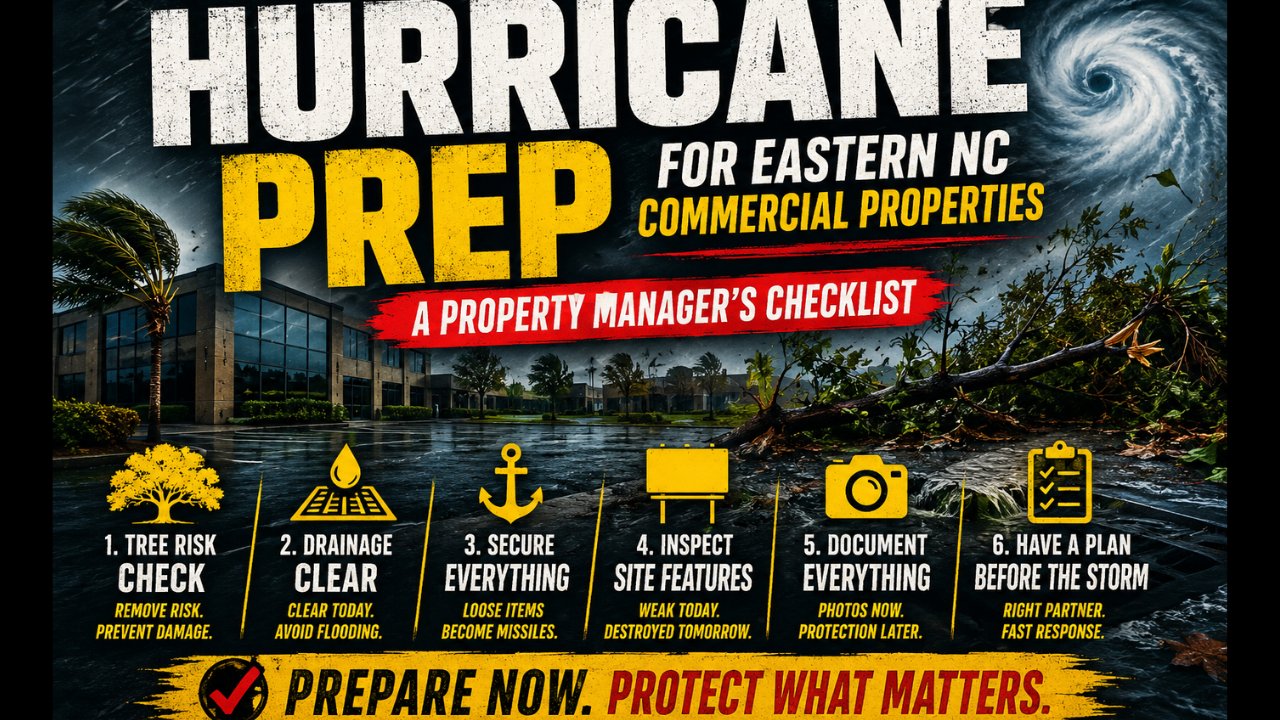

Hurricane season opens June 1.
If you manage commercial property anywhere east of I-95, you already know that one storm can cost more than a full year of landscape maintenance.
A single oak limb through a storefront window or a clogged catch basin flooding a parking lot has a way of ending up on your desk first, with tenants and owners both wanting answers by the end of the day.
The good news is that most of what we see after named storms is predictable; you can walk a property in May and capture most of the risk before the wind ever picks up. Below is the pre-season checklist we run on our commercial accounts in Eastern NC.
READ OUR ARTICLE FROM LAST AUGUST HERE:
1. Walk the Tree Canopy First
Trees cause more damage to commercial property during tropical weather than any other single factor on a site; they are also the easiest to ignore until something falls.
Look for dead or hanging limbs, especially those overhanging parking areas, sidewalks, signage, HVAC units, or rooflines. Pay attention to trees that lean noticeably, have cracks in major unions, or show fungal growth at the base. Pines with thin tops, water oaks past their prime, and Bradford pears are the three species we flag most often in this part of the state.
If you have not had a certified arborist or qualified contractor (Get Shay on the schedule today) walk the property in the last two years, do it now.
The cost of a single assessment is a fraction of the cost of an insurance claim, and most carriers will ask for documentation if a tree-related claim is filed anyway.
2. Clear the Drainage Before the Rain Arrives
Wind gets the headlines, but water does most of the real damage.
Check that every catch basin, storm drain, and grate on the property is clear of leaves, mulch, pine straw, and trash. Walk the swales and ditches; look at the outfall side of any retention or detention pond and make sure nothing is choking the discharge. If you have downspouts that dump into landscape beds, confirm the splash blocks or extensions are still in place and pointed away from the building...
The aim is to have stormwater, falling from the sky, to go where you want it, at a speed that will not destroy whatever is in front of it.
For properties with parking lot drainage, this is the week to call out anything that has been puddling after normal rain events.
If it puddles in a typical thunderstorm, it will flood in a hurricane.
Make sure you're following us on TikTok:
3. Tighten Up the Hardscape and Loose Materials
Anything not bolted down becomes a projectile in 80mph wind; here are some things to look at:
- Retaining walls showing bulging, leaning, or separation at the joints
- Loose pavers, especially at edges and corners of patios or walkways
- Mulch beds graded above hard surfaces, which will wash into storm drains and parking lots
- Decorative river rock and stone beds near buildings, which can break glass when they get airborne
If you have outdoor furniture, planters, umbrellas, or trash receptacles that are not anchored, or bike racks that bolt down with anchors that have rusted out, get a plan in writing now for who will move or secure them when a storm is named.
4. Inspect Signage and Site Features
Monument signs, light pole bases, fence posts, and pergolas all take a beating in tropical weather.
Look for rust at the base of metal posts, rot at the base of wood structures, and any sign panel that rattles or shifts when you push on it. Capture any of this that you can address now, and, at a minimum, document what you find so you have a baseline for comparison after a storm.
5. Document Everything Before the Storm
Walk the property with your phone and take wide shots and close-ups of every building elevation, every major tree, every hardscape feature, and every drainage point. Date-stamped photos before a storm are worth more than almost any other documentation when you are filing a claim or pushing back on a tenant complaint about pre-existing damage.
Save these to a shared folder that your property owner, your insurance contact, and at least one other person on your team (all on top of yourself) can access. If your phone goes underwater or your office loses power, you still want the photos.
FOLLOW ON INSTAGRAM
6. Know Who Is Responding Before the Wind Stops
The single biggest mistake we see is property managers who do not have a pre-storm agreement with their landscape and tree contractor about post-storm response. After a major event, every contractor in the region is booked solid within hours. The properties that are cleared first are those with standing relationships and pre-positioned crews.
Ask your contractor three questions before June 1:
- What is your post-storm response priority list, and where do my properties fall on it?
- Do you have a dedicated emergency phone number or contact during named storm events?
- What does your post-storm rate structure look like, and is there a retainer option for priority response?
If you do not like the answers, this is the time to find a contractor who can give you better ones. Not the week of landfall.
The Bottom Line
You cannot stop a hurricane from hitting Eastern NC. You can stop a hurricane from turning into a six-figure claim on a property you manage. The work is not complicated, but it has to happen before June 1, not after the first cone shows up on the news.
If you want a second set of eyes on a property before the season opens, Landscaping Unlimited offers pre-season commercial property walkthroughs across Eastern NC. We will walk the site with you, flag what we see, and put it in writing so you have something to take back to your owner. Reach out through the contact page on this site, and we will get you on the schedule before the end of May.